The edge of survival — where myth, hunger, and human nature meet.
B.P. Henry is a chef by profession, though poetry and painting came first and never left — not a second career, but a private practice: a way to process what the day-to-day doesn't leave room for. He works and publishes under the name Thanks Given Poet, a name earned rather than chosen, and he has spent years traveling widely, letting the history, culture, food, myth, and folklore of other places shape what he creates.
That same curiosity is what led to Bestiarum Culinarium — a personal project, not a professional one. It takes creatures from scripture and folklore across cultures and renders them as structured, reverent recipes, treating the kitchen the way his training taught him to: with discipline, respect, and attention to where something comes from. The kitchen becomes an altar here, and the meal a form of ritual — a chef's craft turned toward myth instead of the menu.
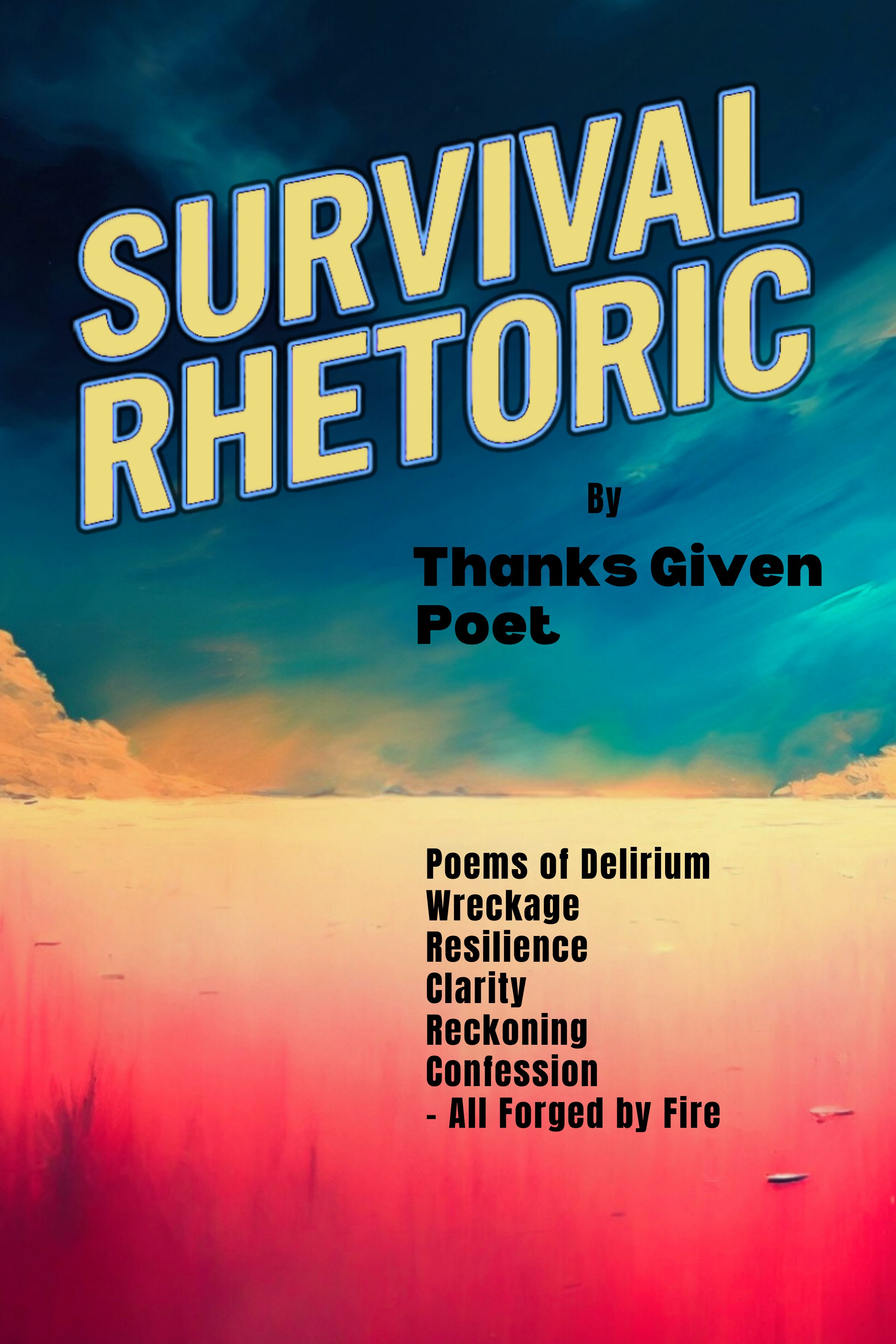
Survival Rhetoric, the poetry collection that follows, comes from the other side of that same instinct. Where the Bestiarum is ritual and order, this is unguarded — raw, confessional writing that moves through pain, failure, and self-reckoning without reaching for easy resolution. It is the therapy underneath the art: a mind working through its own wounds in plain sight, and finding, in the process, moments of clarity and hard-won steadiness.
Two disciplines, one person: a chef's precision applied to myth, and a poet's honesty applied to survival. The name Thanks Given Poet marks that shift — from offering to enduring, and back again.

"To name a creature is to claim dominion.
To cook it is to understand it. To eat it is to become something neither of you were before."
— Thanks Given Poet, Bestiarum Culinarium
A multi-volume mythic cookbook of the world's most feared and storied creatures — their origins, their hungers, and the rituals of their preparation. Click a volume to open it.
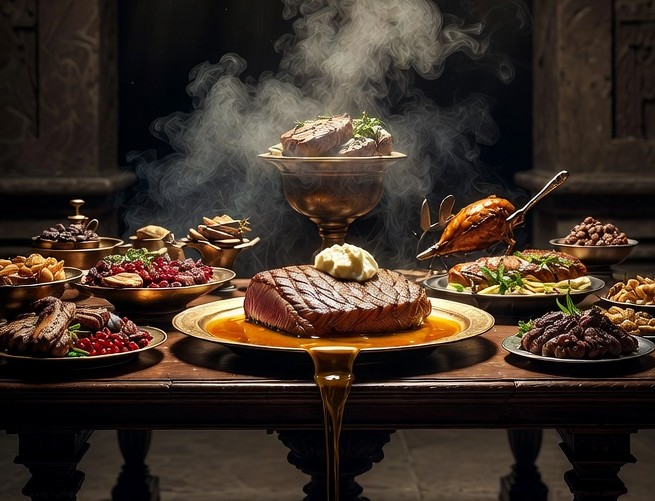
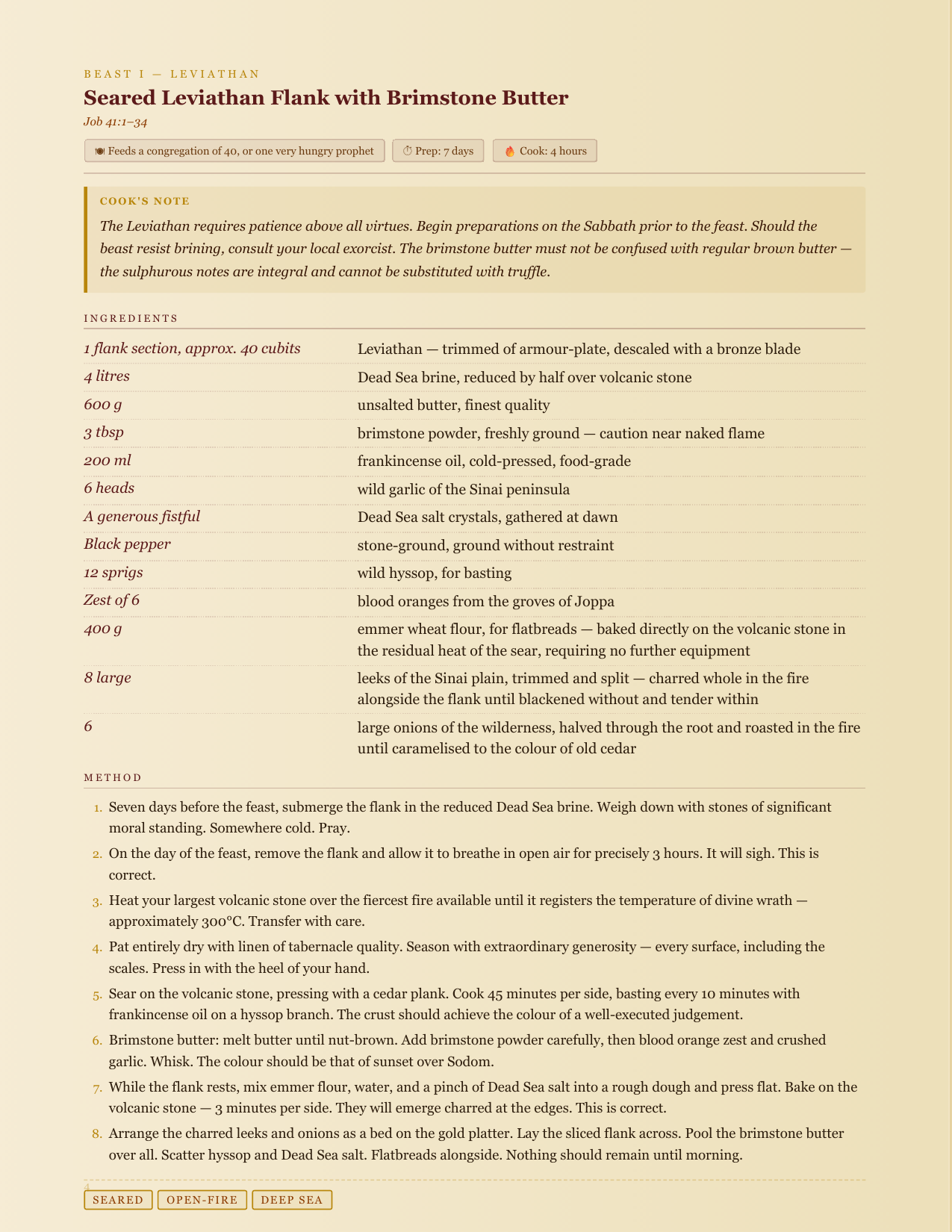
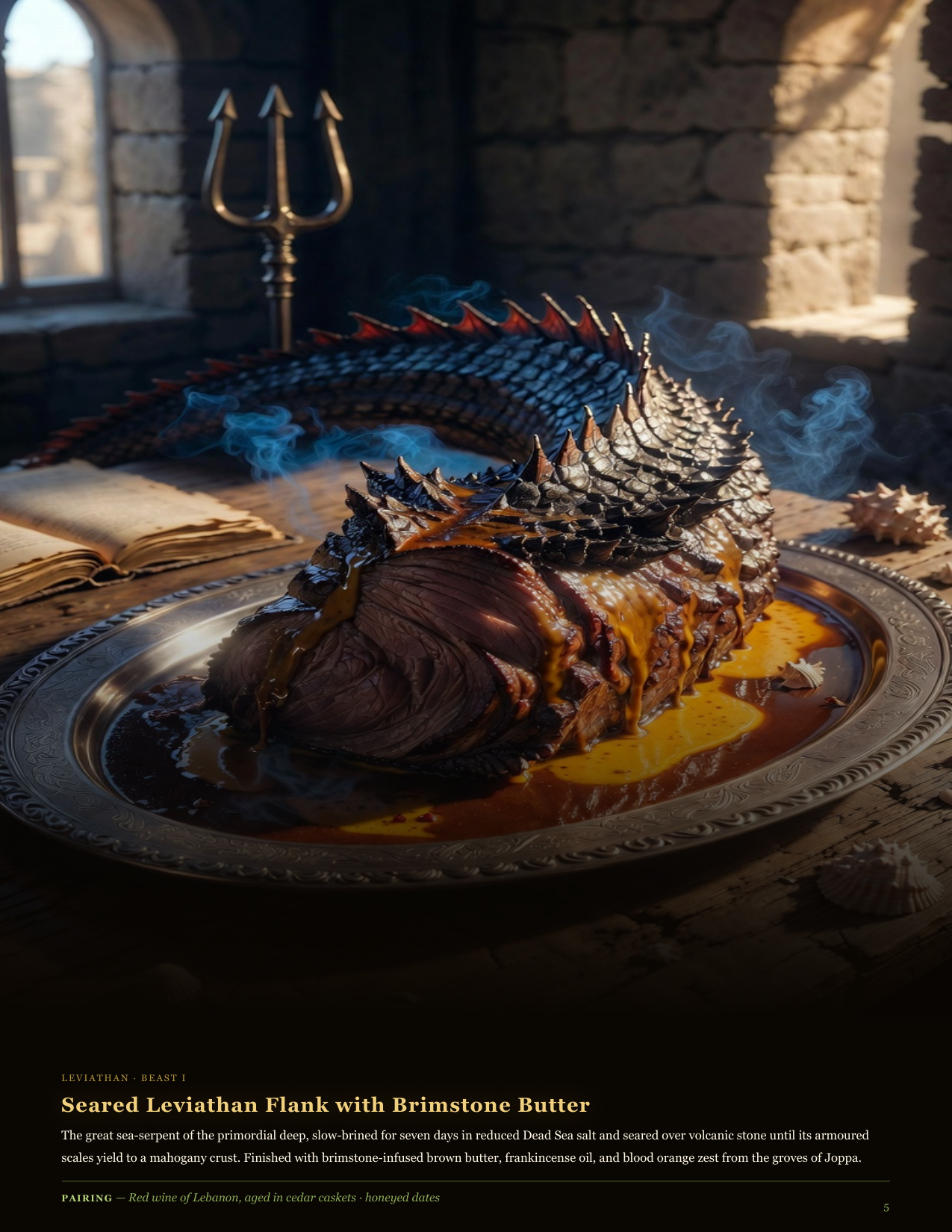
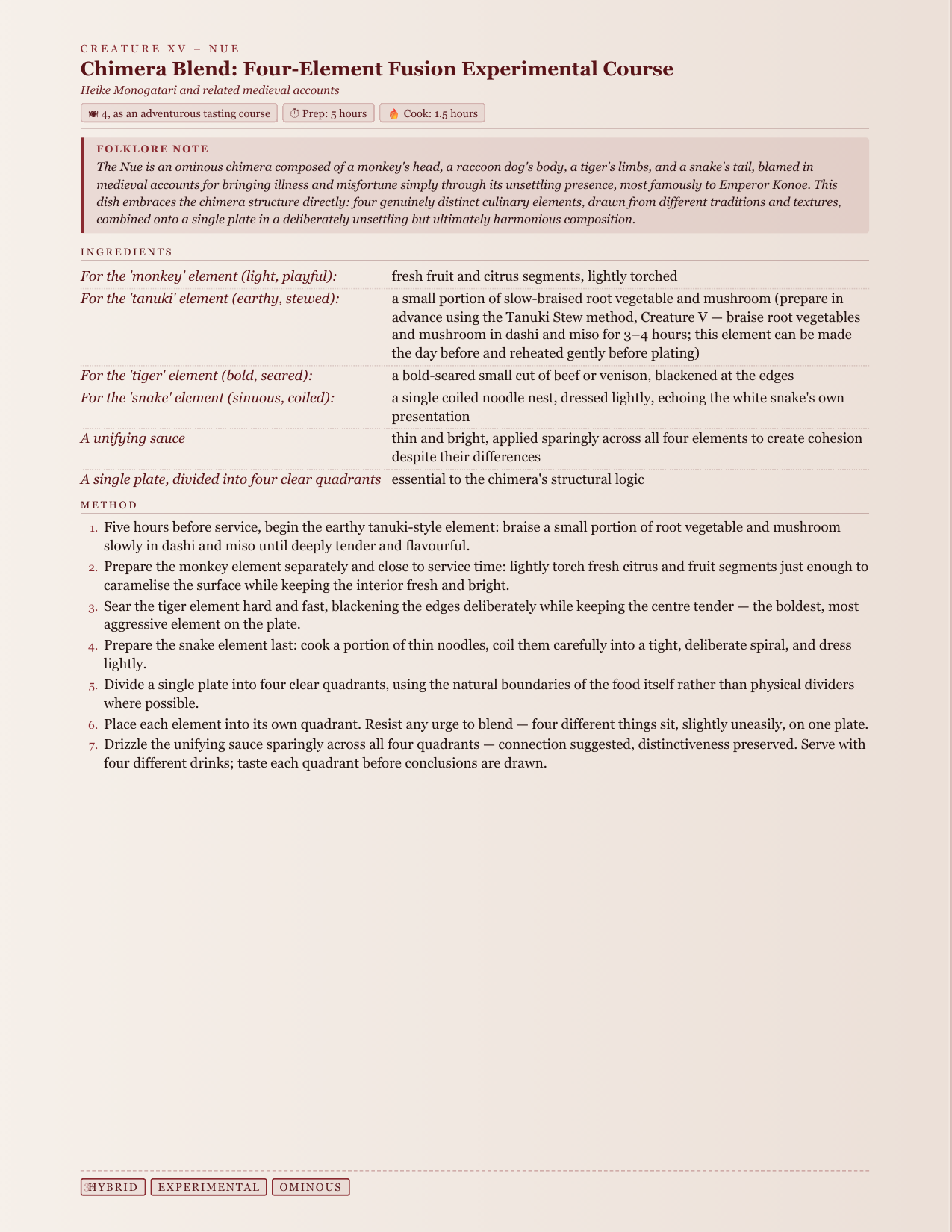
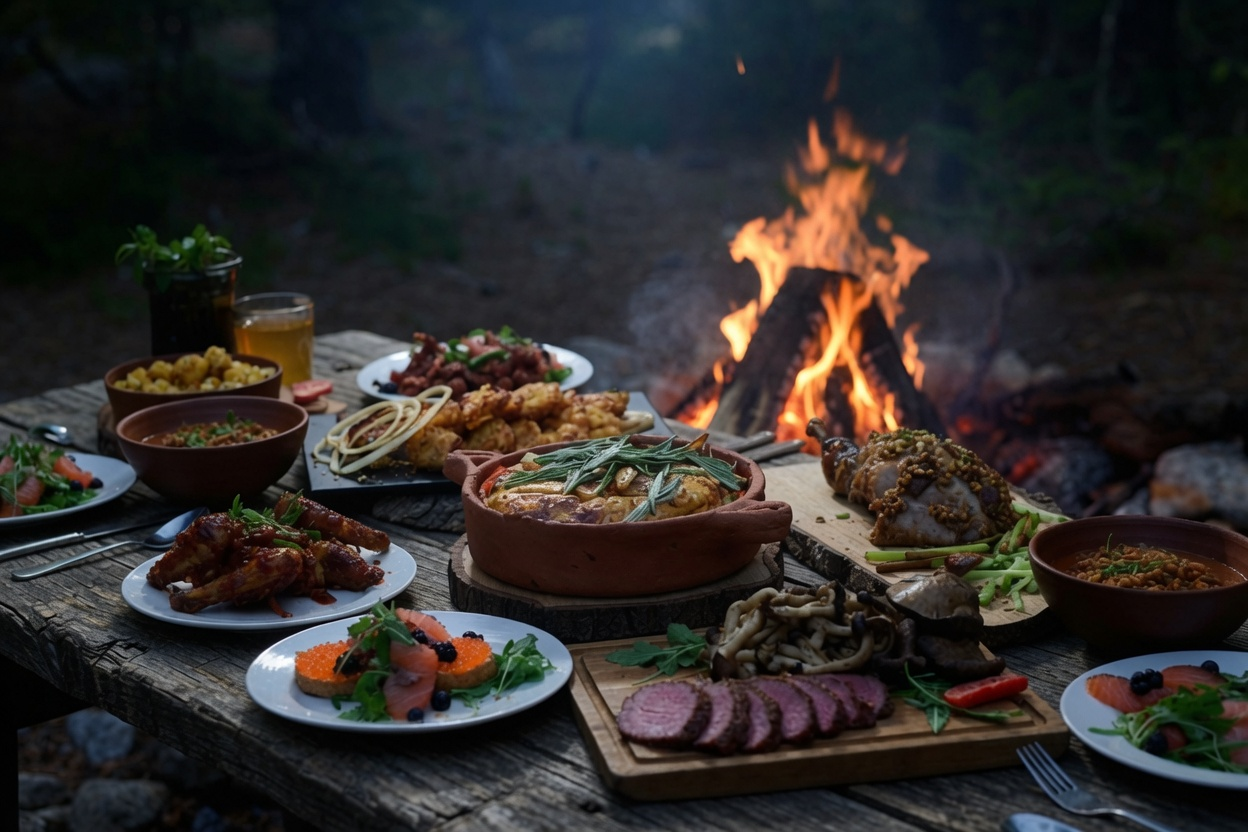
A first taste from the Scripture volume — click an image to view it full size.
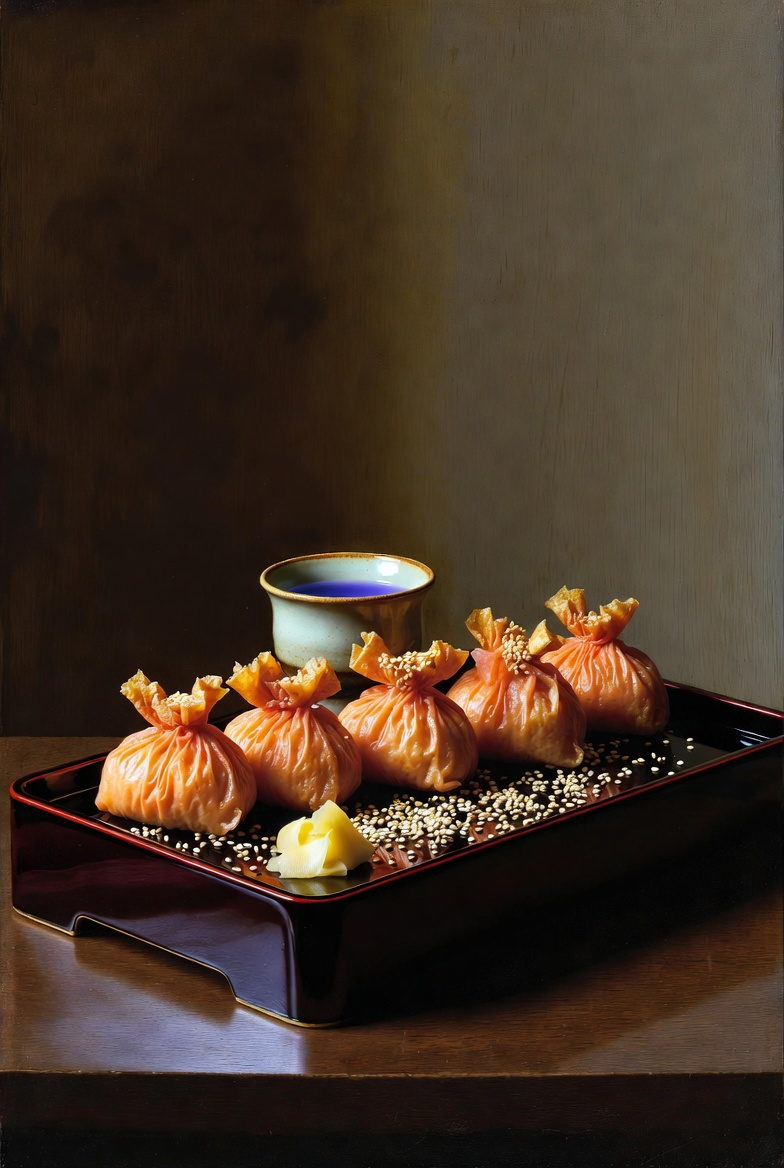
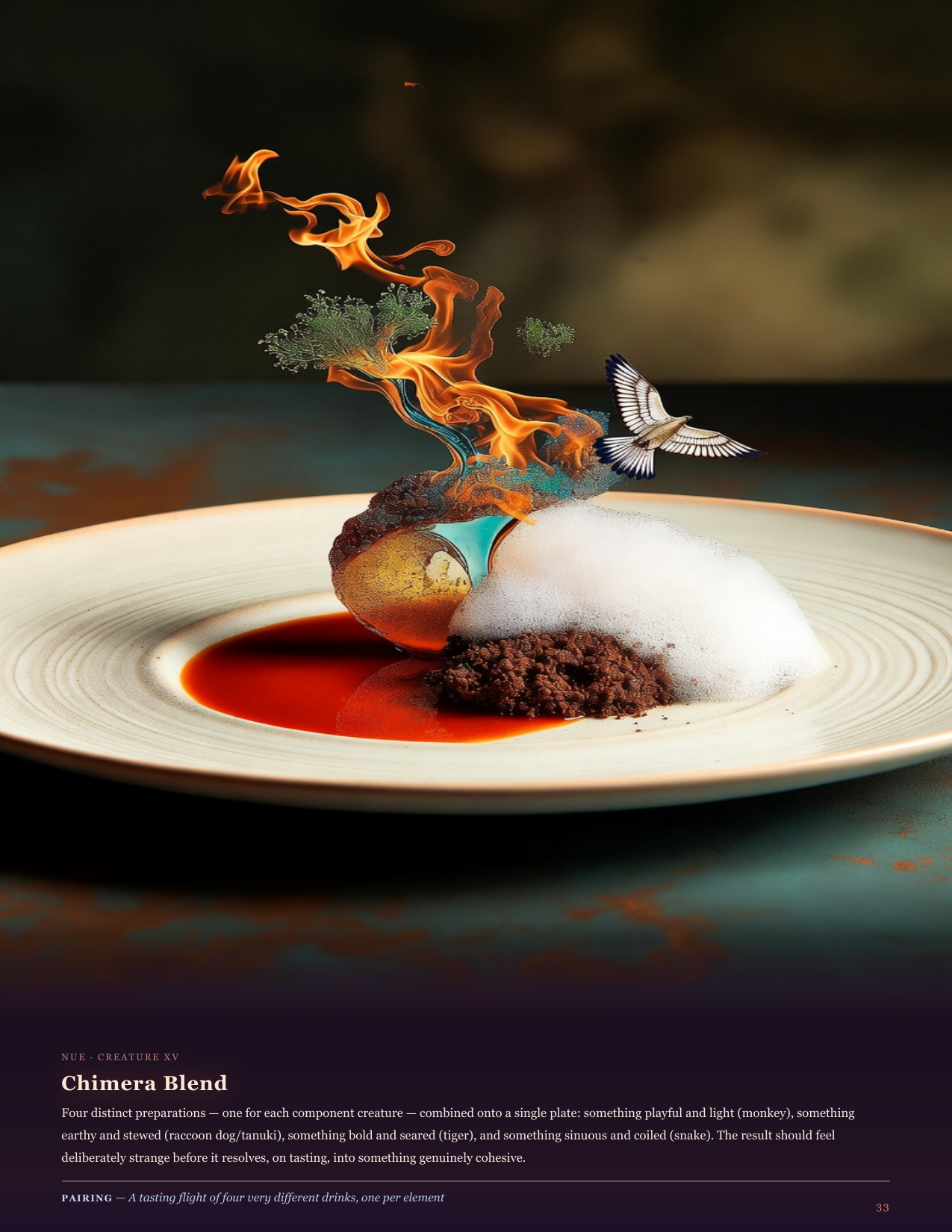
A first taste from the Japanese volume — click an image to view it full size.
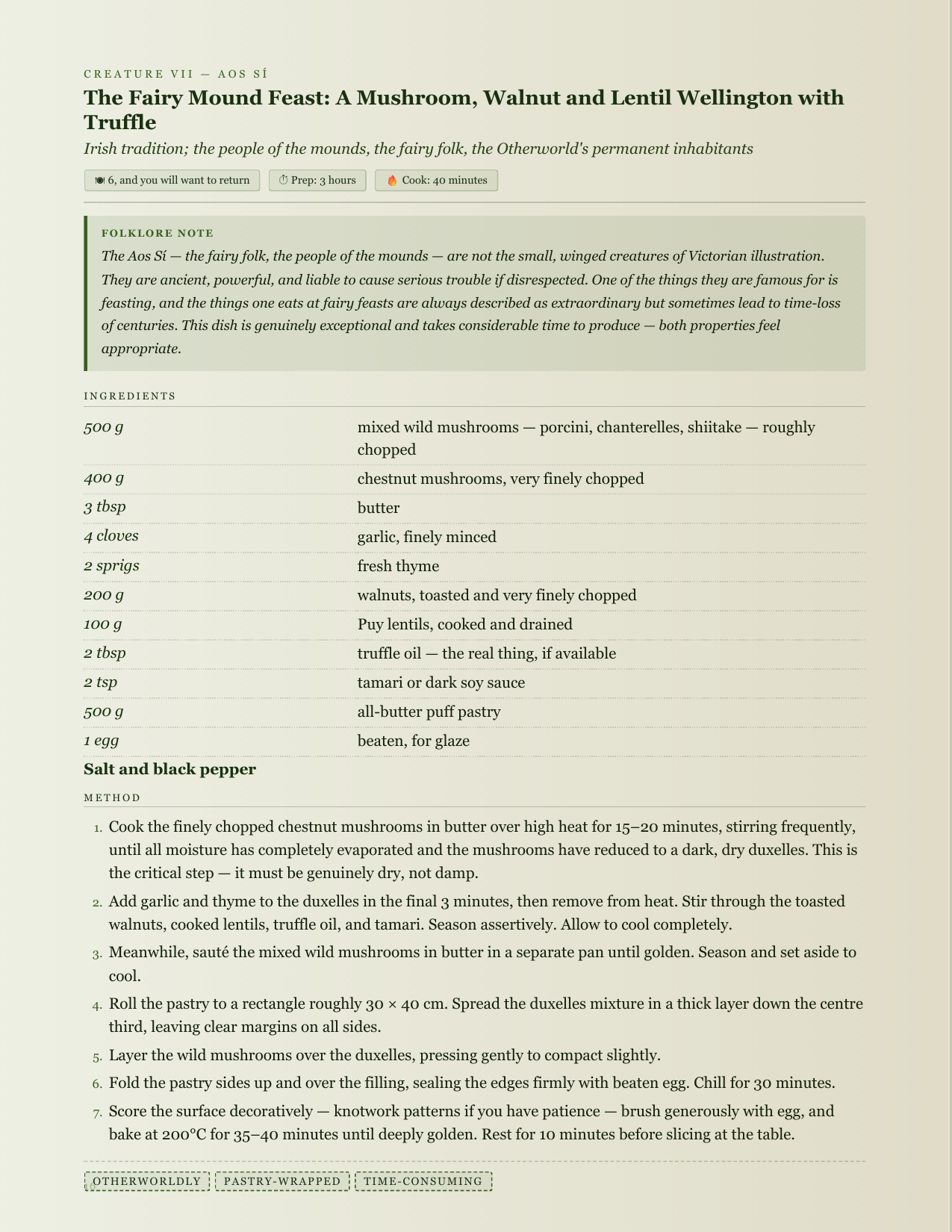
A first taste from the Celtic volume — click an image to view it full size.
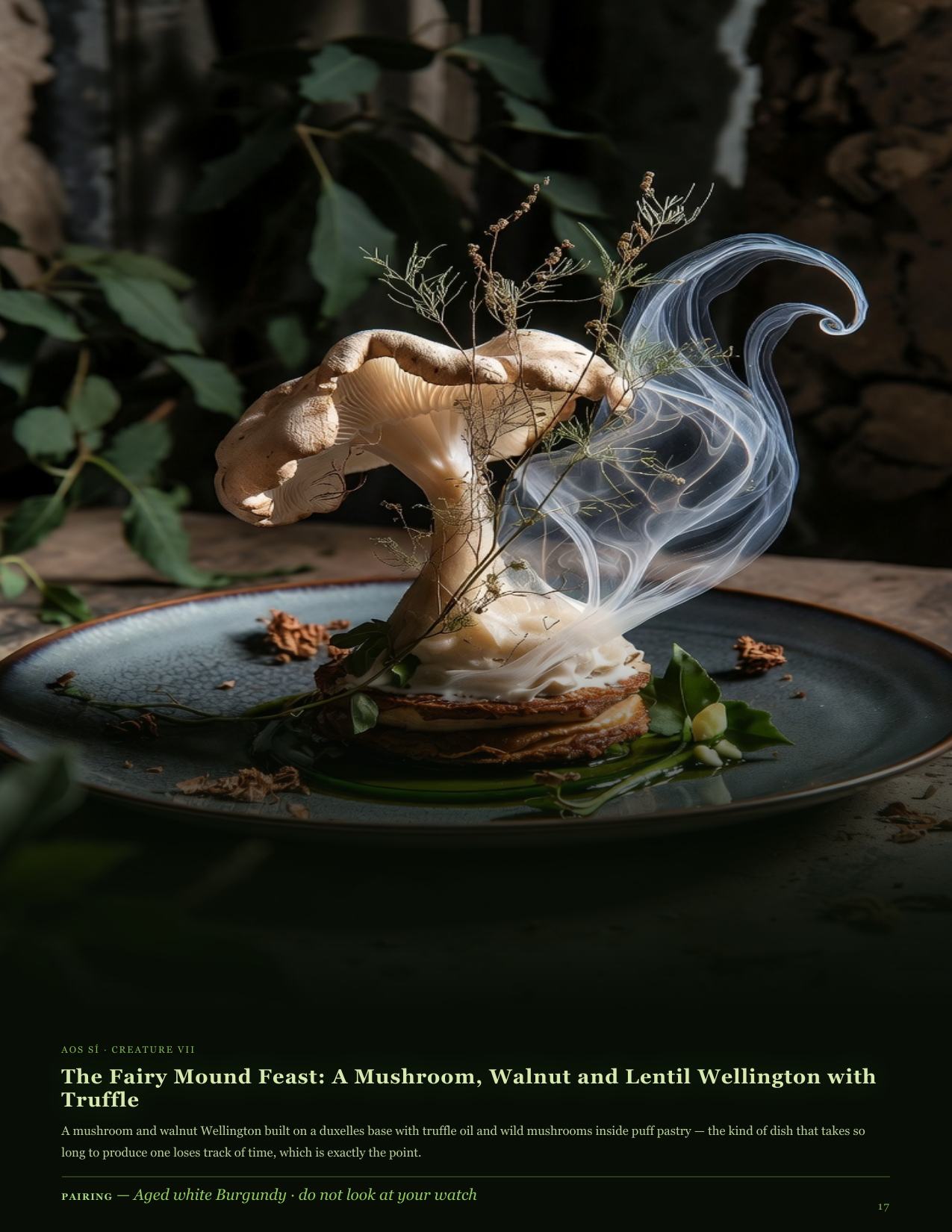
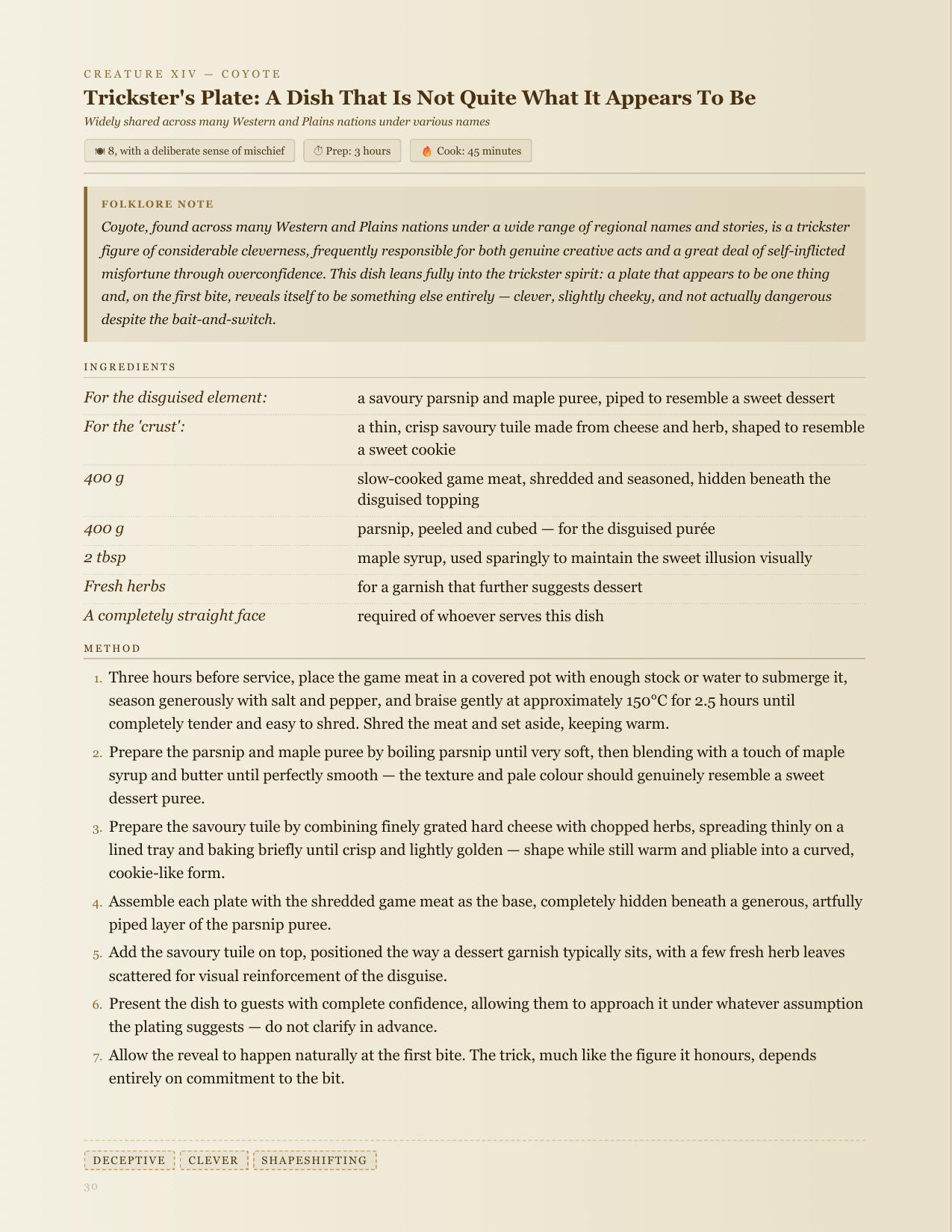
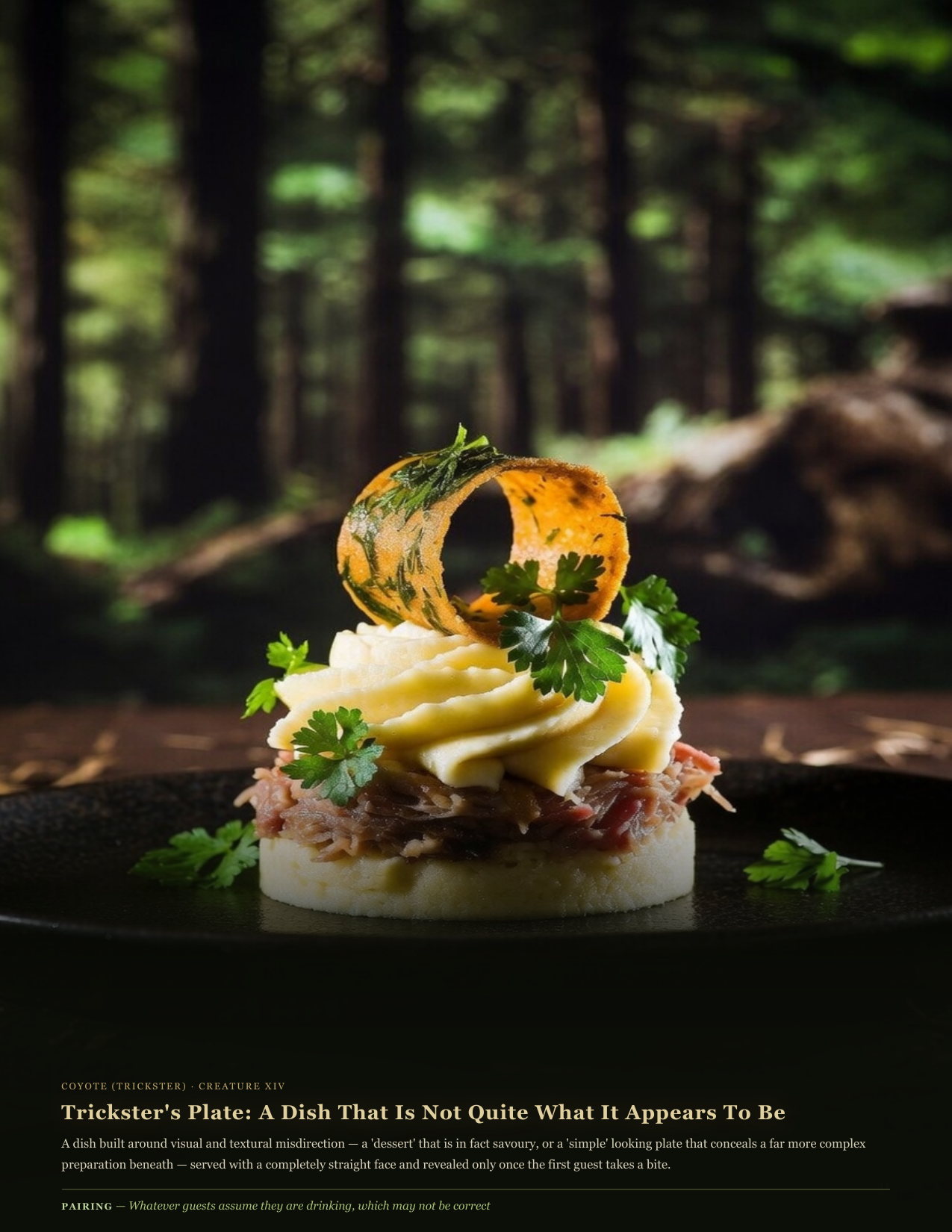
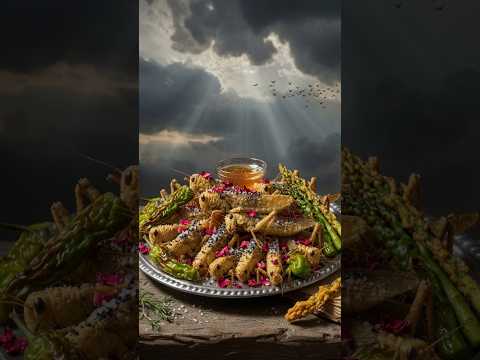
A first taste from the Indigenous North American volume — click an image to view it full size.
"We do not move in a unified direction.
We are always willing to burden ourselves with more."
— TGP, Survival Rhetoric · "Practice Alchemy"
Survival Rhetoric is the record of a mind refusing to go quiet. Across its poems, TGP writes with raw honesty about pain, failure, and disillusionment — personal wreckage, political anger, and emotional damage laid bare without flinching. Language here functions as both witness and tool, a way of staying conscious and human when everything threatens to pull him under.
Rather than simply documenting collapse, the poems practice a kind of everyday alchemy, turning what's broken into moments of clarity and hard-won insight. Even in the darkest passages, an undercurrent of resilience persists — a refusal to surrender to numbness or despair, and a recurring impulse to transform suffering into something that might still serve life.
In the end, Survival Rhetoric is not defined by its darkness but by its determination to keep moving through it. The hope in these poems is not soft or easy. It is forged.
Three poems that hold the architecture of the book — its spirit, its geography, its refusal to be comforted.
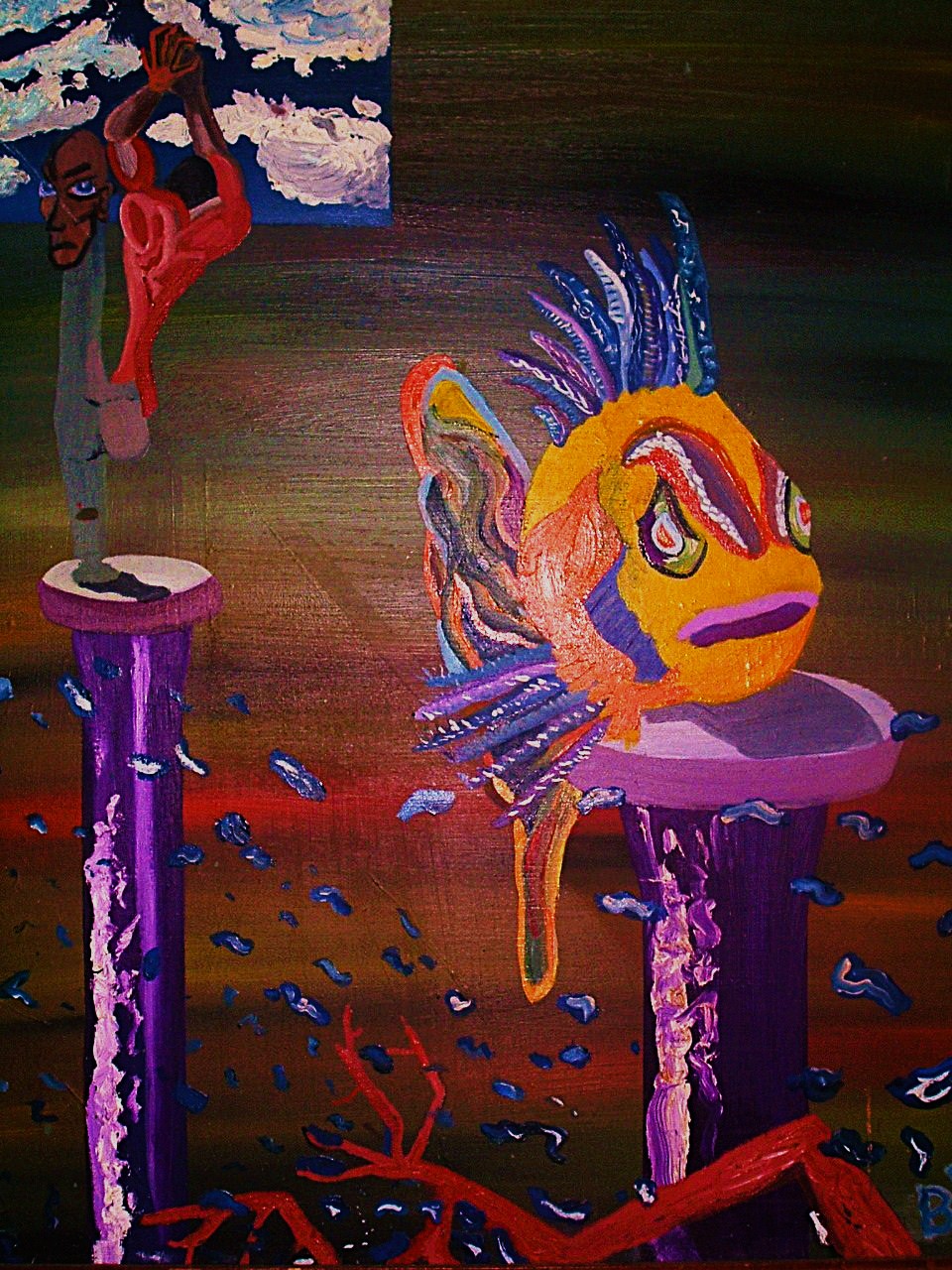
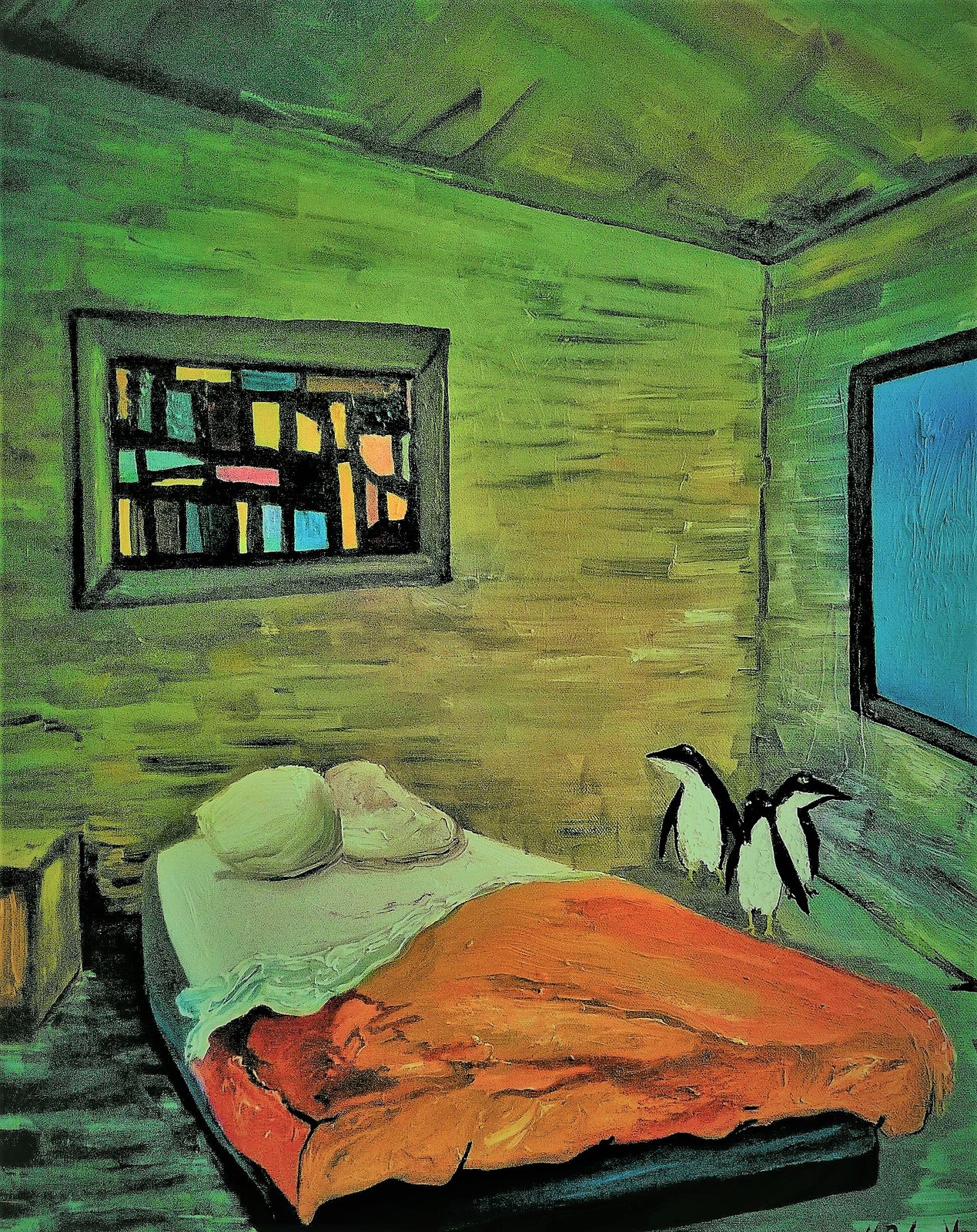
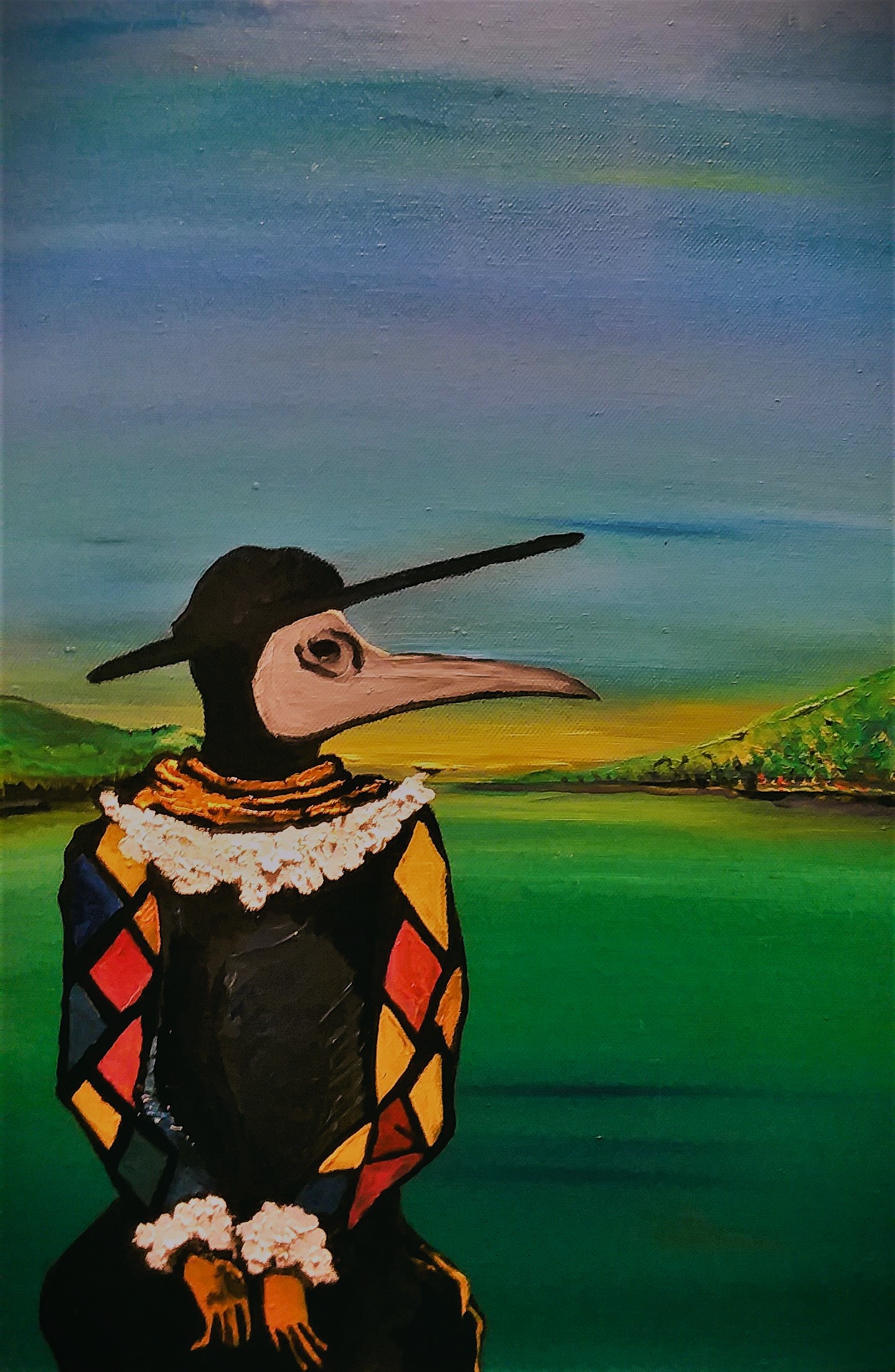
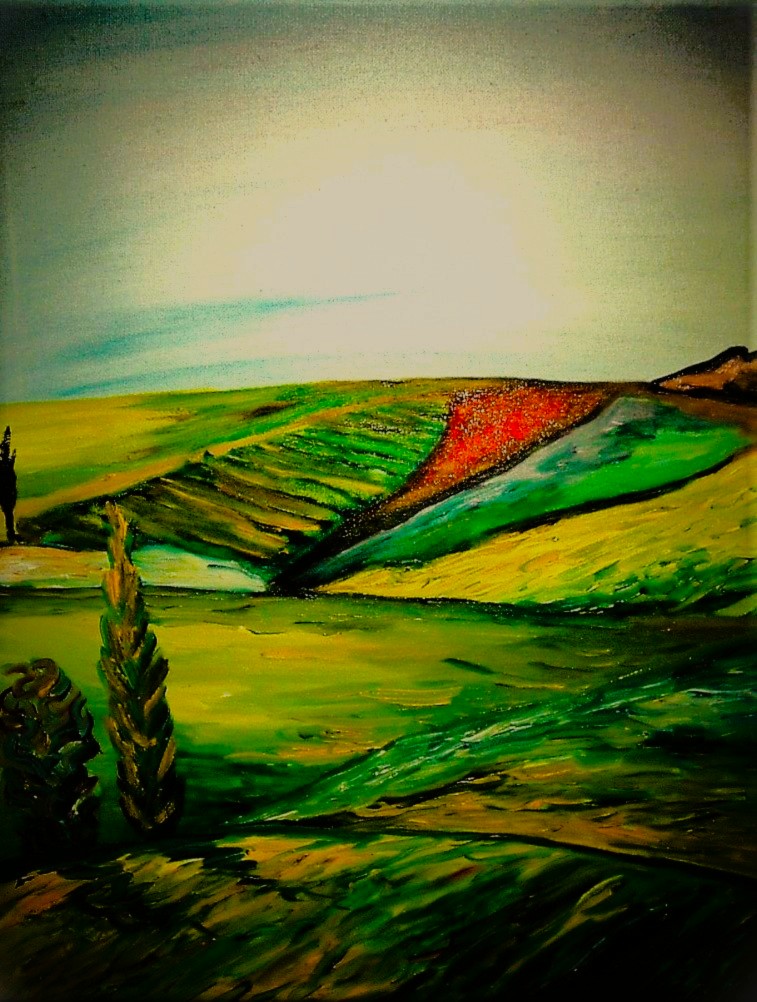
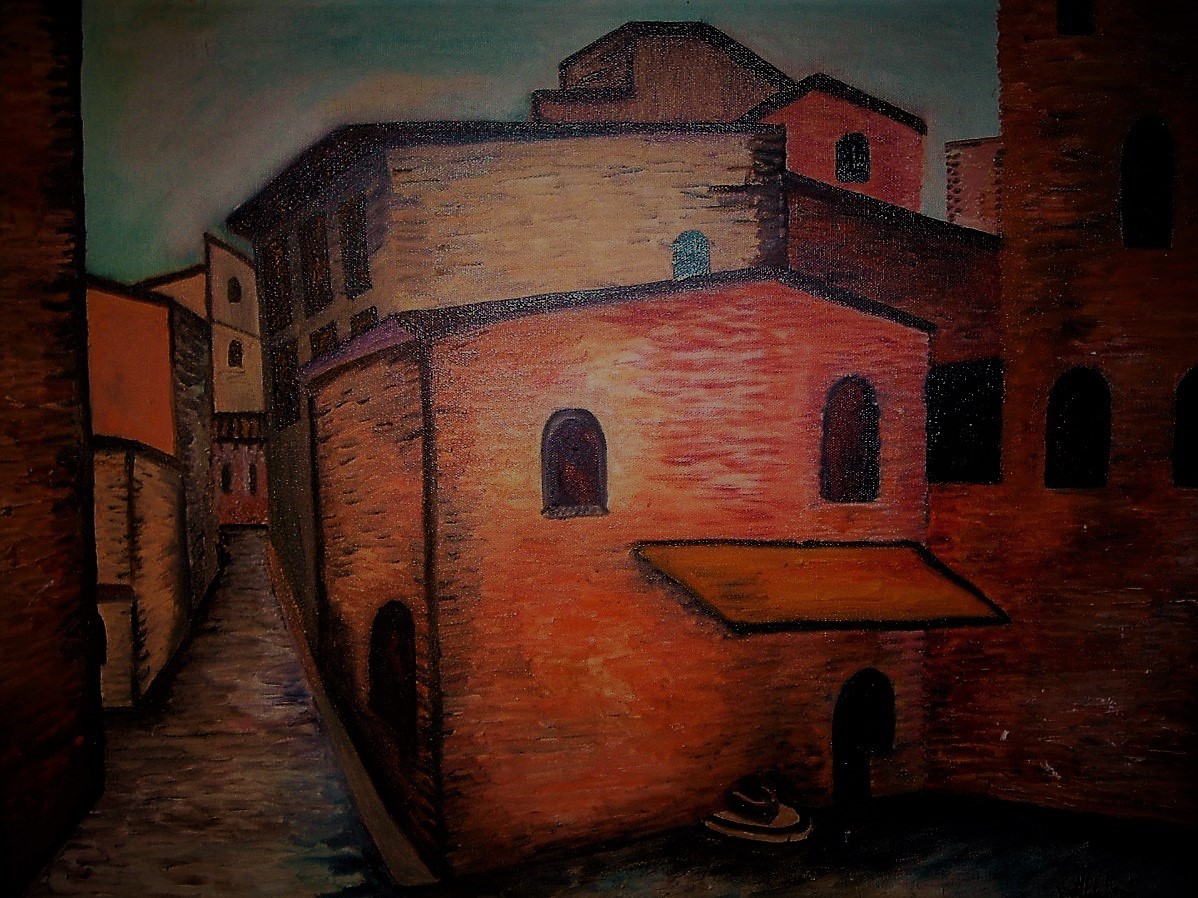
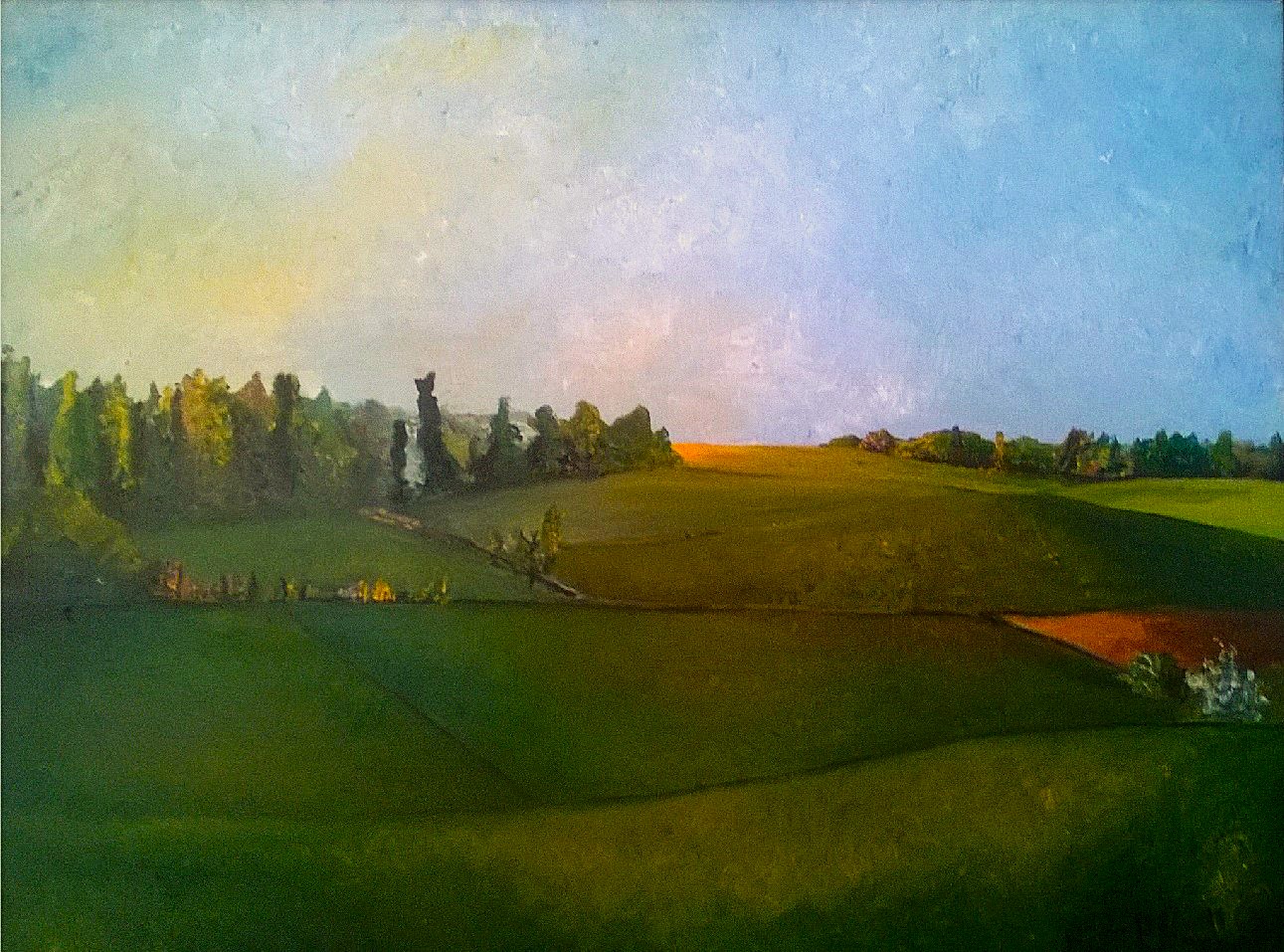
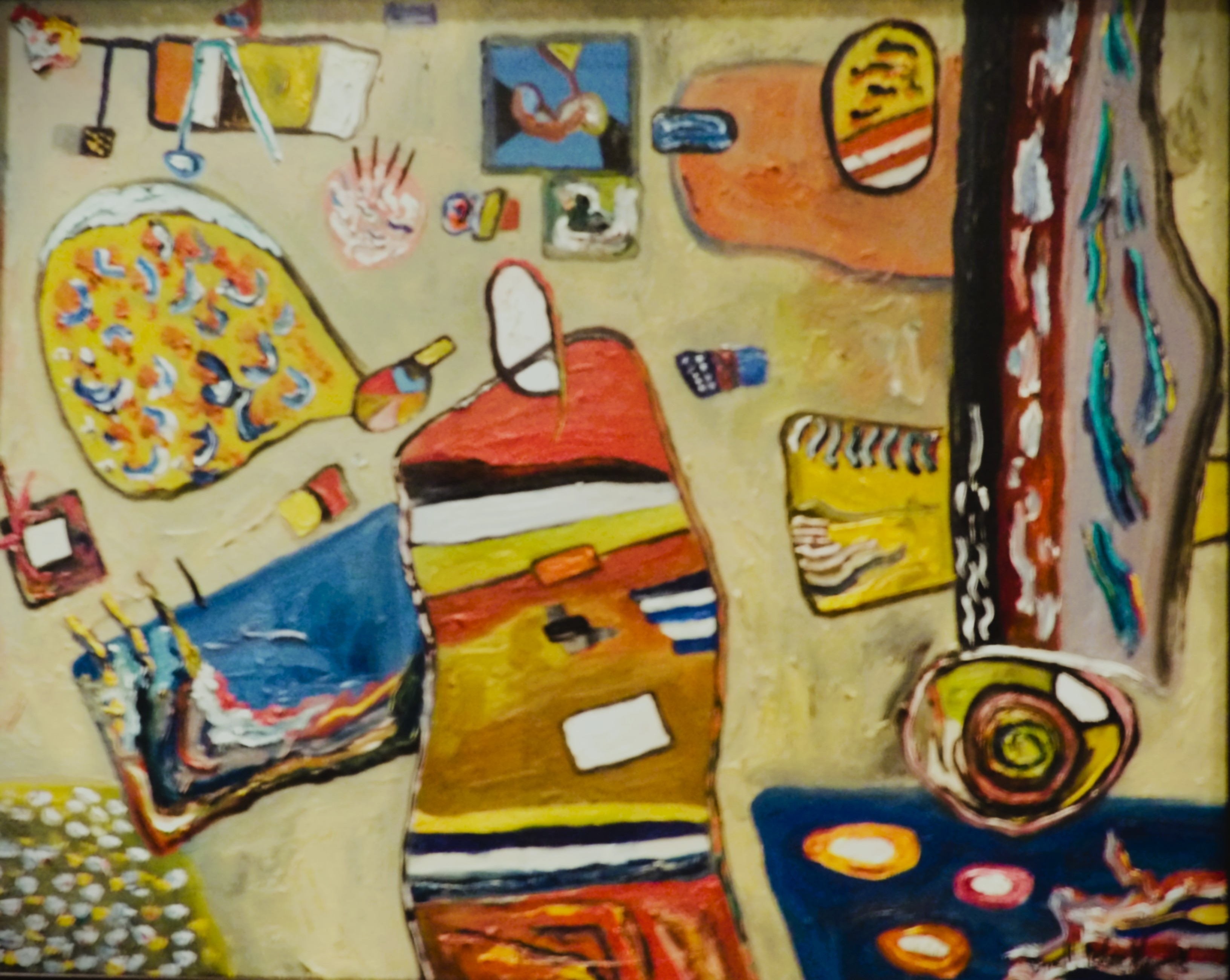
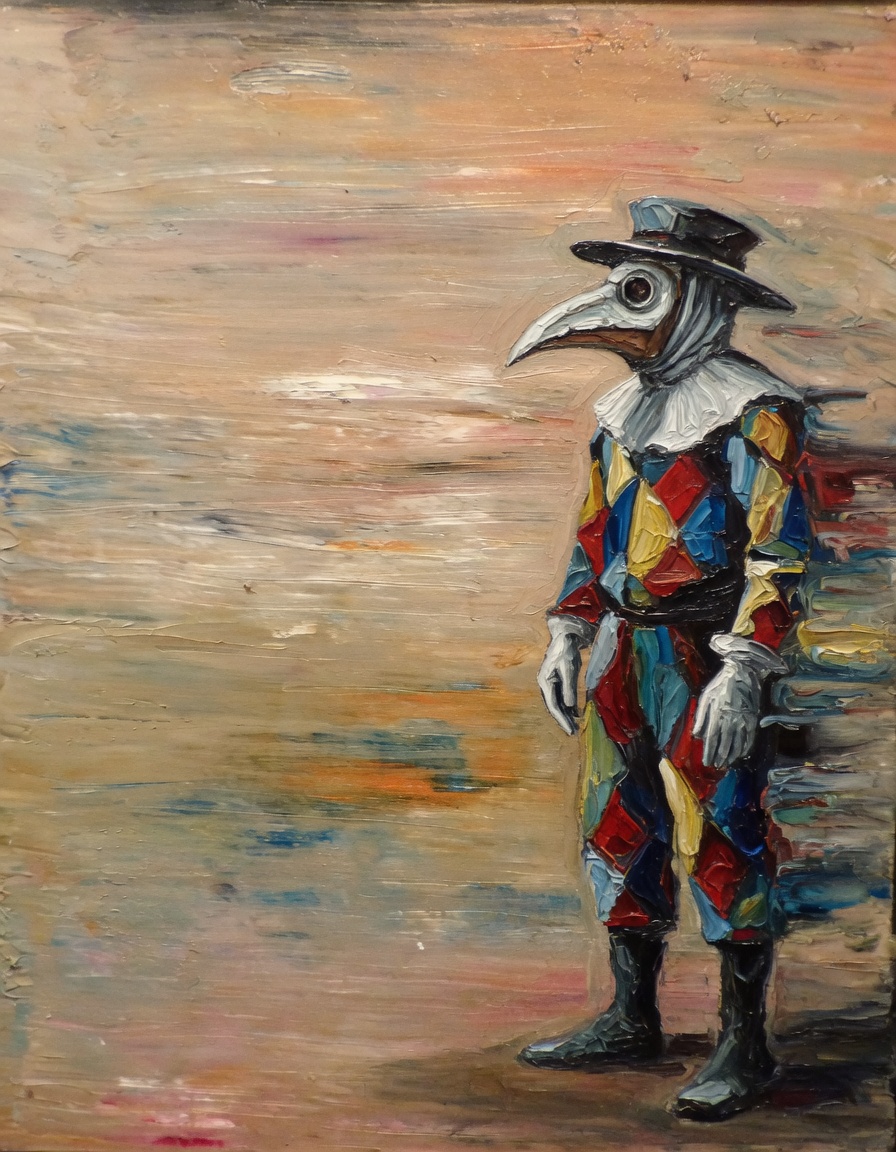
Works in oil and mixed media spanning decades — the same eye that reads myth into landscape and finds the sacred in the street-level detail.
Where the Bestiarum Culinarium puts mythological creatures on the plate, the Potatorium puts them in the glass. Drawing from scripture, mythology, and folklore across cultures, each entry renders a creature, god, or spirit as a structured cocktail recipe — the same reverent discipline applied to the bar as to the kitchen. Elixirs brewed from biblical plagues, philters distilled from fairy lore, libations poured for the restless dead. The draught does not corrupt. It reveals.
Apep cut into pieces and defeated nightly, only to reform by the next evening's crossing; Anubis presiding over a properly weighted scale; Ammit waiting at the edge of judgment for hearts that fail the test. Twenty gods and guardians drawn from three thousand years of temple and funerary text, cooked with the same dry reverence — and irreverence — as the rest of the series.
The Imugi coiled in the cold river, a thousand years into its wait for the dragon-pearl; the Gumiho's nine tails; the Dokkaebi's mischief at the edge of a mountain path. Twenty creatures drawn from Korea's shamanic, Confucian, Buddhist, and animist currents, rendered through the same culinary discipline as the volumes before it — the sixth in the Bestiarum series.
Sneak peek coming soon.
Jörmungandr circling the world-sea with his tail in his mouth; Fenrir bound and waiting; Hugin and Munin reporting back each night to Odin's table. Twenty creatures drawn from the Poetic and Prose Eddas, cooked with the same gallows humor and Northern stoicism the sagas themselves are known for — the seventh in the Bestiarum series.
Sneak peek coming soon.
A fictional museum catalog of objects that were never built, never sent, never kept — cataloged with the same seriousness other institutions reserve for what actually happened. A standalone literary object in the same voice as the Bestiarum.
Sneak peek coming soon.
Ninety-six percent of the universe is something no one can see, name, or explain — dark matter, dark energy, the vast unlabelled weight of everything. The ocean floor remains less mapped than the surface of Mars. Whole languages have vanished before anyone thought to write them down.
And yet, reaching across the distance between two people is still worth something.
TGP is a chef by profession, and a poet and painter by practice — shaped by years of travel and a lasting interest in history and lore. Messages about the work, the writing, or the paintings are read in full, and a reply follows when the moment is right.
Send a Message